
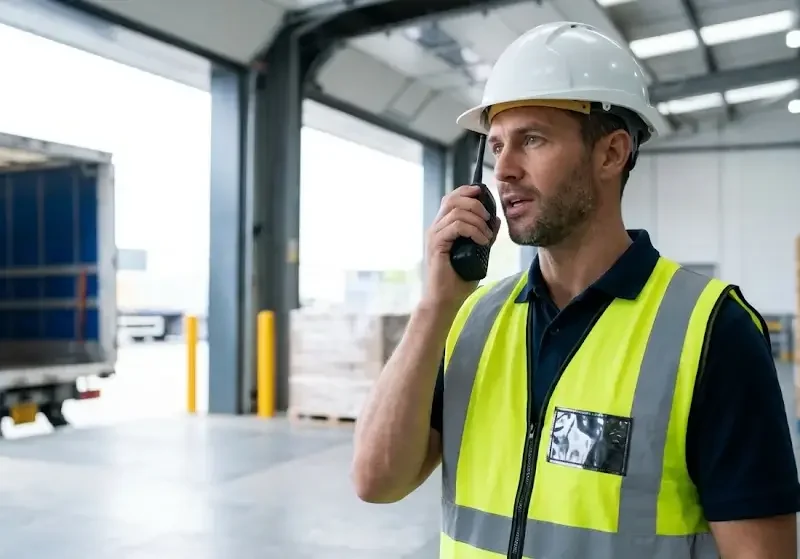
A warehouse supervisor calls from the loading dock. The reply comes through clearly. Then a forklift turns behind a row of metal racks, and the next message breaks up.

That familiar problem explains why buyers ask about a 5w walkie talkie. Five watts can provide useful coverage, but the number alone cannot tell you whether a radio will reach every part of your site.
What Does 5 Watts Mean?
The 5W figure usually describes the radio’s rated transmit power at a specified setting. It tells you how much radio-frequency power the transmitter can deliver, typically at the antenna connection.

Check the datasheet for the measurement point and operating conditions. The power radiated by the antenna is a separate measurement, and regulators may express limits in different ways.
A radio also needs a capable receiver, a suitable antenna and compatible channel settings. A strong transmission helps little if the other radio cannot hear it clearly.
How Far Can a 5W Walkie Talkie Reach?
There is no single reliable distance for every site. Two radios may communicate across a long, clear path and struggle across a much shorter path through concrete or steel.

Terrain, antenna position, interference, and receiver performance all affect the result. A manufacturer’s maximum range can describe favorable conditions that your team rarely encounters.
Use a site test to set expectations. If your staff work in basements, test the basements. If they work behind closed fire doors, include those doors.
Why Warehouses Can Be Difficult
Consider a warehouse with a dispatch office at one end and a loading dock at the other. The radios may work well along an open aisle.

Move one user behind dense metal shelving, and the signal can change. Forklifts, stock, and closed doors can alter the path during a shift. Test the route when the building resembles normal working conditions.
Can a Repeater Help?
A repeater receives a signal and retransmits it from another location. A well-placed repeater can improve coverage across a larger site or around obstacles.
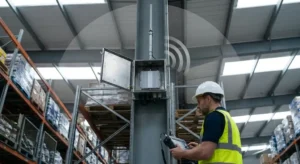
Both handhelds still need a usable path to the repeater. You also need compatible radios, suitable frequencies, and any permissions required in your market.
How Does 5W Compare With 2W and 10W?
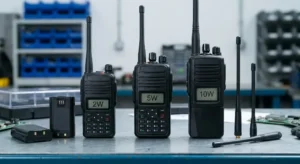
A 5w walkie talkie has more transmit power available than a comparable 2W radio. That can help on a weak path, although it does not guarantee a specific range increase.
For perspective, an increase from 2W to 5W adds about 4 decibels of transmit power. Under an ideal free-space model, that could increase distance by roughly 1.6 times. Buildings, terrain and interference make real results less predictable.
A 10W handheld offers another power increase, but it may use more battery while transmitting. Its extra power may also offer little help behind a large obstruction.
| Rated transmit power | Practical consideration |
|---|---|
| 2W | May suit short-range work where coverage tests pass and local rules allow it. |
| 5W | Offers additional transmit power for more demanding paths, subject to equipment and licensing rules. |
| 10W | May help on some weak paths, but check battery demands, equipment suitability and local limits. |
Compare radios at the same site before deciding. Antennas and receiver performance can differ between models, even when their power ratings match.
Where Does a 5w Walkie Talkie Make Sense?
A 5W handheld can suit teams that need direct communication across a worksite. Construction crews, security staff and warehouse teams often need quick group calls without relying on a cellular network.

The right choice depends on the site. A small shop may have adequate coverage with a lower-power, licence-exempt radio. A sprawling industrial facility may need a repeater or a different system design.
For teams spread across separate cities, cellular push-to-talk may be worth evaluating. Its coverage depends on the mobile network and service, so check that coverage at each work location.
How to Test Coverage Before You Buy
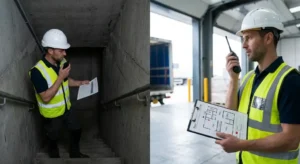
Ask your supplier for evaluation units, then test the locations that matter to daily work. Use the intended frequency, antenna and radio settings.
- Mark essential locations. Include loading bays, stairwells, offices, basements and outdoor edges.
- Test in both directions. Each user should send and receive a short message.
- Check during normal activity. Machinery, vehicles and background noise can affect communication.
- Record weak spots. Note the location and whether speech is clear enough to understand.
- Repeat after changes. Compare results if you move an antenna, change equipment or introduce a repeater.
A 5w walkie talkie that passes a parking-lot test may still fail beside a noisy production line. Include the places where staff actually need an answer.
Do You Need a Licence?
Rules depend on the country, frequency, equipment and intended use. Check these details before ordering or programming a fleet.
In the United States, the Family Radio Service has channel-specific power limits, with a maximum of 2W effective radiated power on certain channels. A radio operating at 5W exceeds that FRS limit. GMRS requires an individual licence and follows its own rules. Businesses should check the appropriate business radio authorisation for their operation. See the US radio service rules.
In the United Kingdom, licence-exempt PMR446 equipment has a maximum of 500mW effective radiated power and must meet other equipment conditions. Selecting a low-power setting alone does not establish compliance. See Ofcom’s business radio guidance.

What Should Buyers Check Before Ordering?
Start with your coverage and compatibility requirements. Send the supplier a site plan and a list of locations where communication must work.
Ask about these details:
- Frequency and authorisation. Confirm the intended band, equipment approval and local operating permissions.
- Existing fleet. Check frequency, analog or digital mode, channel settings and any privacy or encryption features.
- Battery and charging. Request operating-time figures that state the transmit, receive and standby assumptions.
- Audio and durability. Check whether staff can hear calls in their working environment and use controls with gloves.
- Accessories and support. Confirm compatible batteries, chargers, headsets, replacement parts and programming support.
Two radios do not automatically work together because both use UHF or both advertise 5W. Their settings and communication protocols must match.
Frequently Asked Questions
Is a 5w Walkie Talkie Enough for a Warehouse?
It may be enough, but the answer depends on the building and the required coverage. Metal racks, walls and stock can create weak spots.
Test sample radios at the loading dock, inside aisles and in enclosed rooms. If the link fails in essential areas, ask a qualified supplier to assess the system design.
Will More Power Double the Range?
No. Doubling transmit power does not generally double communication distance. The result depends on the radio path and the rest of the equipment.
If a team loses contact behind a hill or deep inside a building, a better antenna location or a properly designed repeater may help. Confirm any change against local rules.
Does a 5w Walkie Talkie Work Without Cell Service?
A conventional handheld radio can communicate directly with another compatible radio within range. It does not need a cellular network for that direct link.
A push-to-talk device that uses a cellular network works differently. Check which technology the product uses before purchasing.
Choosing Your Next Radio
A power rating is a useful starting point. Your coverage test gives it meaning.
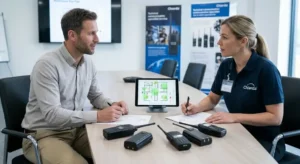
If you are comparing radios for a business fleet, share your site layout, target market and existing equipment with Chierda. The team can discuss your communication requirements and the information needed for a suitable quotation.