

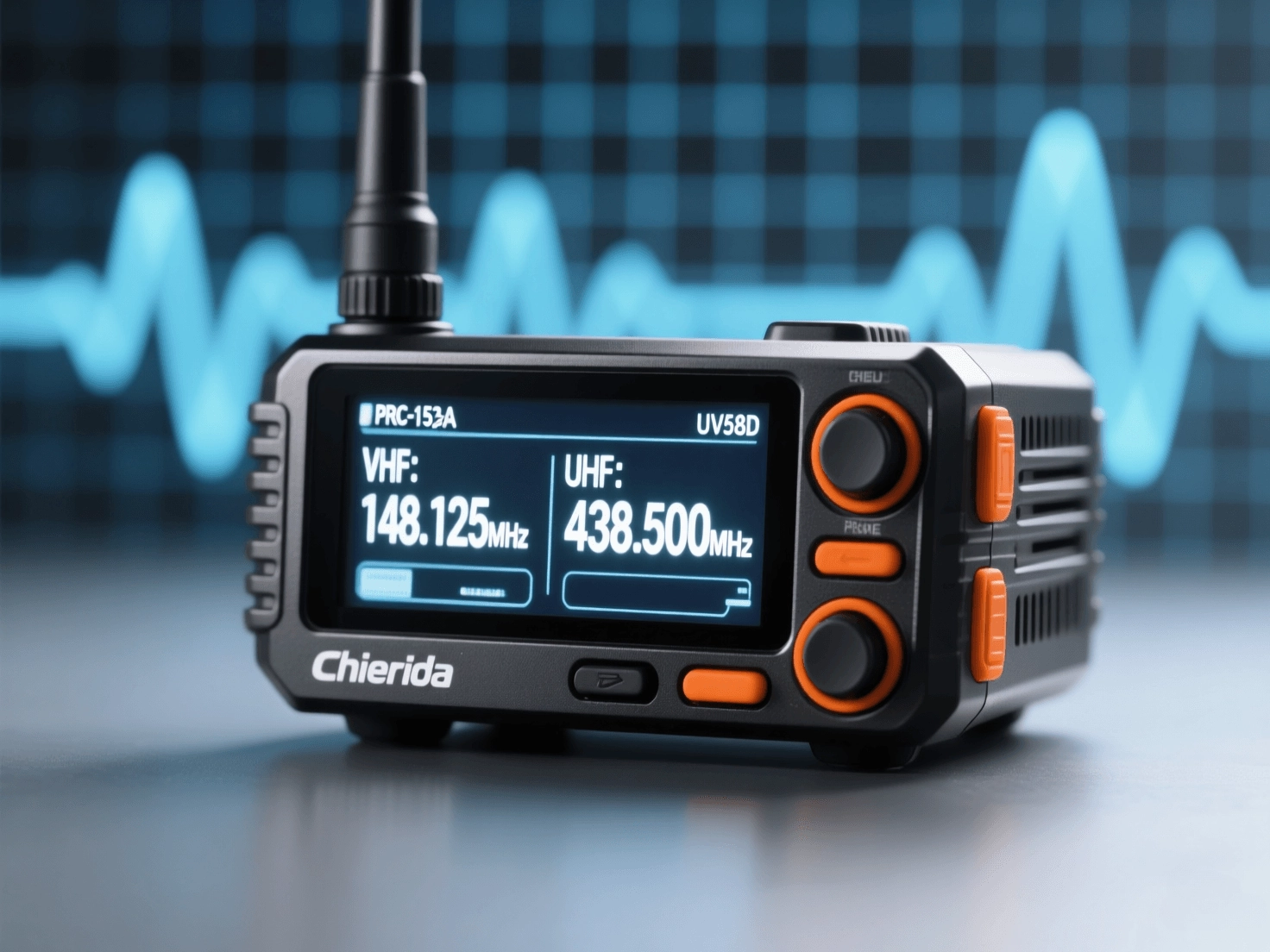
When you’re getting serious about radio communication, you’ll inevitably face a choice: VHF or UHF? One is better for long-distance in the open, the other excels at punching through urban obstacles. But what if you didn’t have to choose? Why choose one frequency when you can master two? Welcome to the world of the dual band radio, the multi-tool of the radio universe and a top choice for any serious ham radio handheld.
A Quick Refresher: The Strengths of VHF and UHF
To understand the power of a dual band radio, you first need to remember what makes each band unique.
-
VHF (Very High Frequency): The King of Open Terrain. VHF waves are longer, allowing them to travel further over open country, rolling hills, and water. It’s the preferred band for many outdoor and rural applications.
-
UHF (Ultra High Frequency): The Master of Urban and Indoor Penetration. UHF’s shorter waves are much better at finding their way through and around obstacles like buildings, vehicles, and dense forests. It’s the go-to choice for city use and communication inside structures.
The “Superpowers” of a Dual-Band Radio
Owning a radio that can operate on both VHF and UHF gives you three distinct advantages that single-band radios can’t offer.
1. Unmatched Flexibility: Switch between VHF and UHF on the fly.
Are you starting your day in the city (UHF) and heading out to the countryside (VHF) later? With a dual-bander, you’re always using the best possible band for your environment without needing to carry two separate radios.
2. Enhanced Monitoring: Using the
This is a game-changing feature. A dual watch radio allows you to monitor two frequencies at the same time. You can listen to your local emergency weather channel on VHF while simultaneously staying in contact with your team on a UHF channel. The radio will stop on whichever frequency becomes active.
3. Critical Interoperability: The bridge between different agencies.
For emergency communication radio users, this is vital. During a large-scale event or disaster, you may need to coordinate with different groups. Fire departments might use VHF, while a local CERT team uses UHF. A dual-band radio is the only handheld device that can bridge this gap, allowing you to talk to both.
The Ultimate Pro-Feature: Understanding Cross-Band Repeat
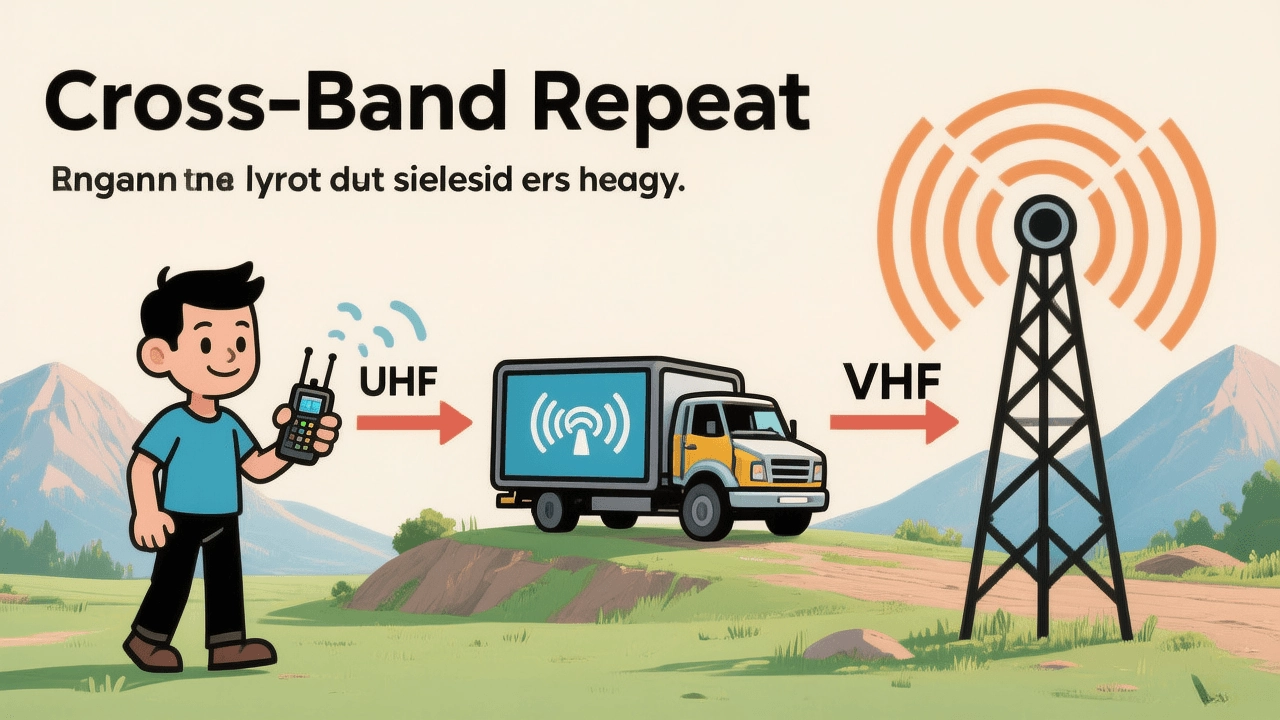
Some advanced mobile (vehicle) dual-band radios offer a powerful feature called cross-band repeat.
How a
Imagine you are hiking away from your vehicle, and your low-power handheld can’t reach the main repeater on a distant mountain. With cross-band repeat, you can set your high-power mobile radio in your truck to listen for your handheld’s signal on a UHF frequency and simultaneously re-transmit it with high power on a VHF frequency to the main repeater. You effectively use your truck as your own personal signal booster.
What to Look for When Buying a Dual-Band Handheld
When you’re ready to buy, keep these features in mind:
-
True Dual Receive vs. Dual Watch (TDR vs. DW): A radio with “Dual Watch” scans between two frequencies. A radio with “True Dual Receive” has two separate receivers and can listen to both bands simultaneously without scanning, which is a more advanced feature.
-
A Large, Easy-to-Read Display: Since you’re monitoring two frequencies, a large screen that clearly shows both is essential.
-
Robust Memory Channel Capacity: You’ll be programming in both VHF and UHF repeaters, so a large memory bank (128 channels or more) is a must.
-
Our Top Picks: As a trusted radio manufacturer, we offer some of the best value in the market. The versatile Chierda UV58D and the rugged PRC-152A are excellent choices that provide powerful dual-band performance.
Stop Choosing, Start Communicating on a New Level of Versatility
A dual band radio is the ultimate tool for any serious radio operator who demands flexibility, power, and control. It frees you from the limitations of a single band and opens up a new world of communication possibilities. Stop choosing between VHF and UHF, and start mastering both.
FAQ: Your Top Dual-Band Radio Questions
Do I need a special antenna for a dual-band radio?
Yes. You must use a dual-band antenna that is specifically designed to operate efficiently on both the VHF and UHF bands. Using a single-band antenna will result in very poor performance on the other band and can even damage your radio.
Does a dual-band radio transmit on both bands at the same time?
No. While you can monitor two frequencies at once, you can only transmit on one frequency at a time. You typically select which one you want to be your primary transmit frequency.
Is programming a dual-band radio more complicated than a single-band one?
Slightly, but not by much. The process is largely the same, but you will have the ability to save both VHF and UHF frequencies into your memory channels, which actually makes it more organized.
Are there dual-band mobile (vehicle) radios as well?
Absolutely. Dual-band mobile radios are very popular. They offer all the advantages of a handheld dual-bander but with much higher power and often include advanced features like cross-band repeat. Ready to upgrade? Check out our top-rated dual-band radios.