Product Overview

The Chierda CD360 is a compact analog handheld two way radio for short-range voice coordination on site. It is offered in two frequency versions, VHF 136-174MHz and UHF 400-480MHz, each with 16 memory channels and selectable 12.5KHz or 25KHz channel spacing. Transmit power is 2W from a 3.7V DC battery pack.
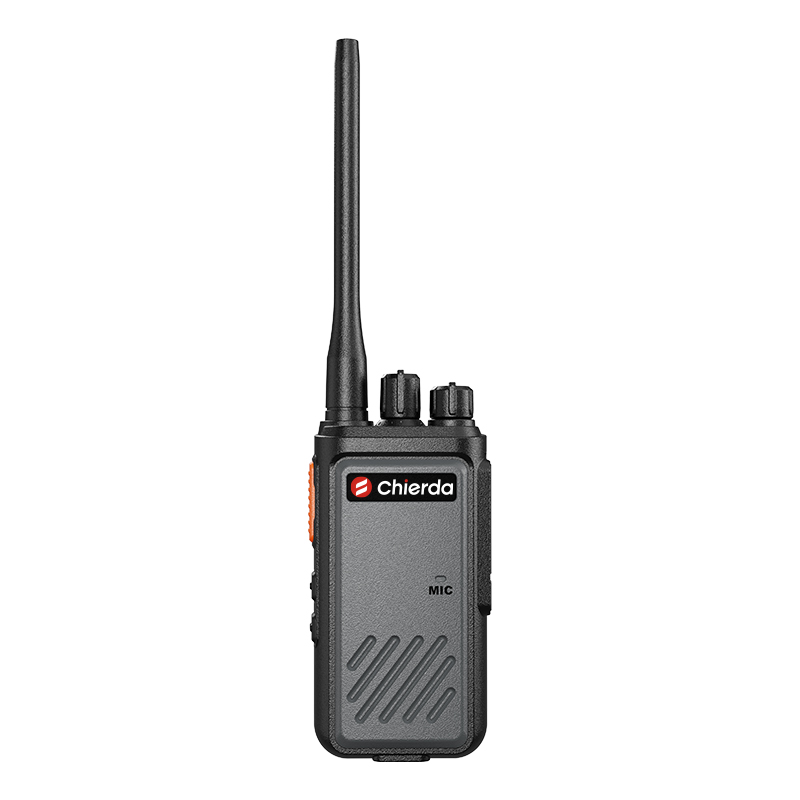
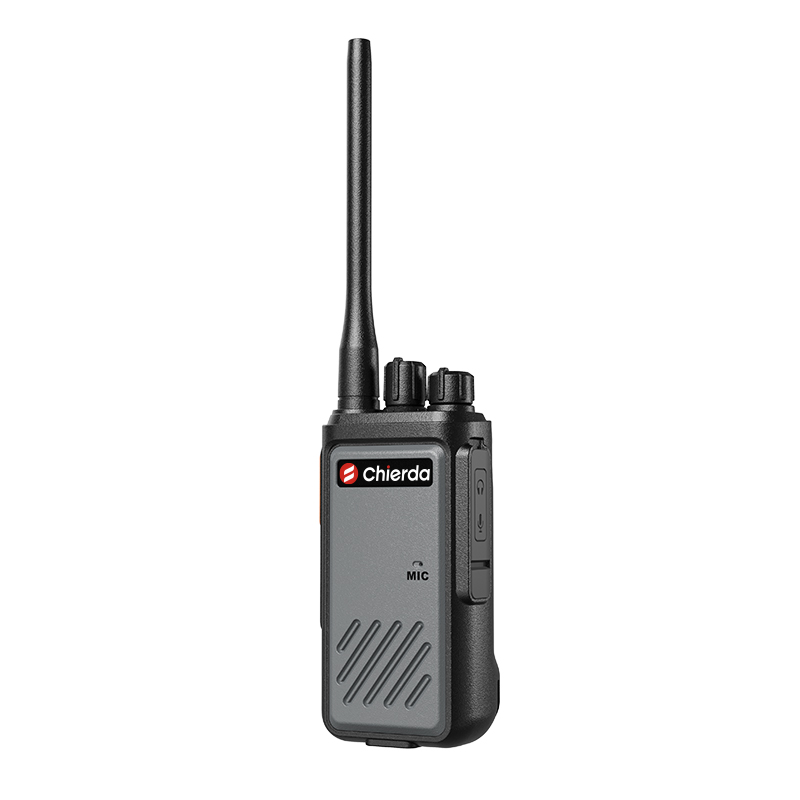
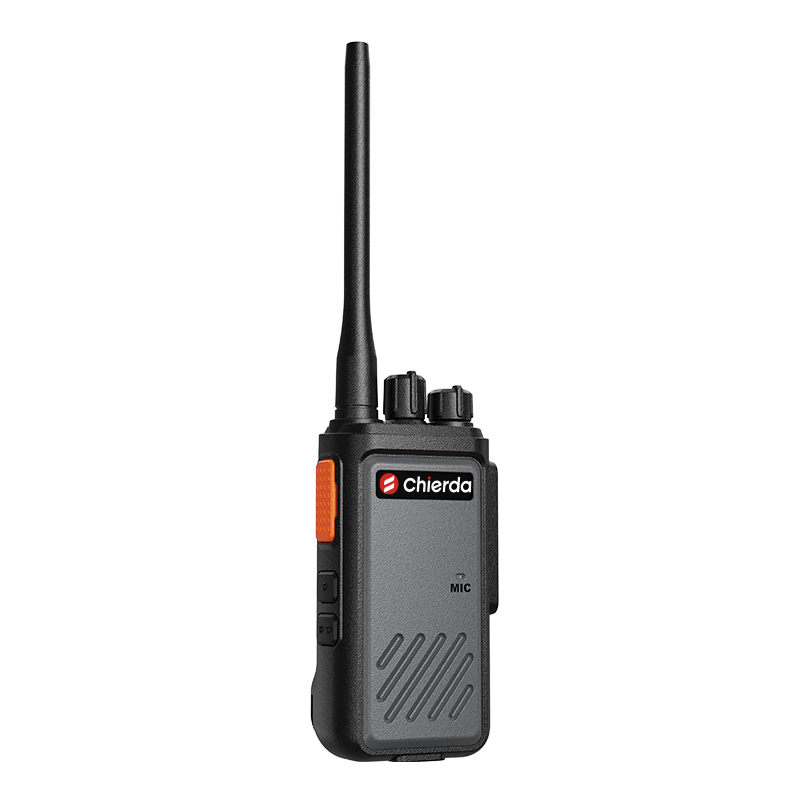
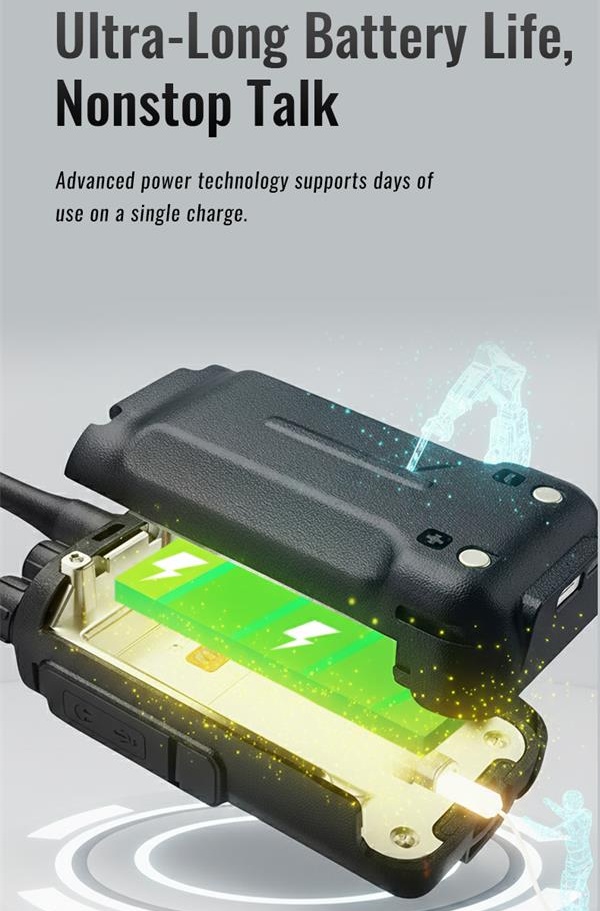
Two battery capacities are available, 1500mAh and 2600mAh. The radio hardware is the same in both cases, so the 2600mAh pack is the option to pick when a shift runs longer between charges. The body measures 98.5 x 53 x 35 mm without the antenna, which lets it sit in a pocket or on a belt clip without blocking movement.
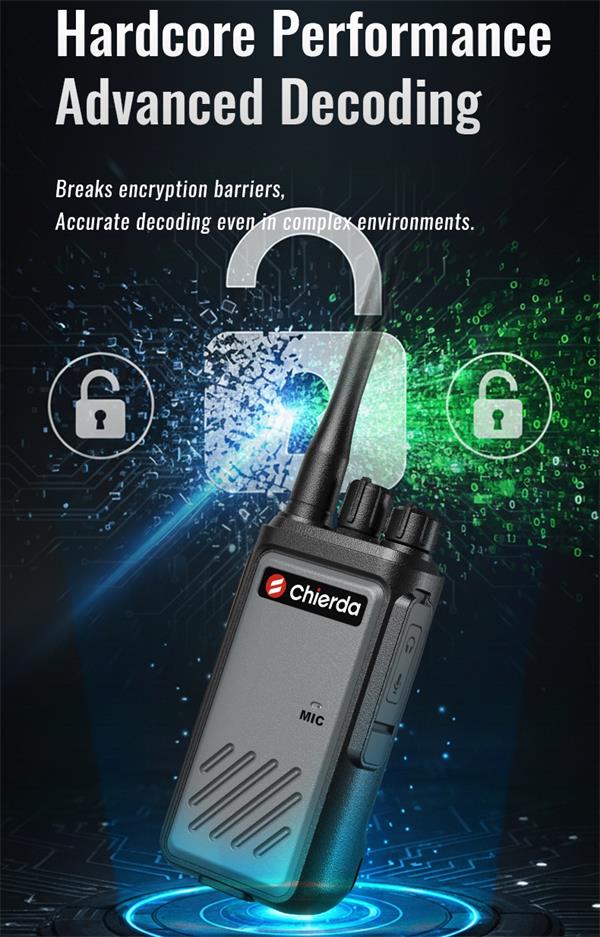
Setting up a group is where the CD360 moves away from a basic handheld. One-key frequency pairing and one-key channel copy pass a working configuration from one radio to another without a programming cable. The code-breaking function is built for sites where several radio brands are already in use, so a newly added CD360 can be matched to the codes in use instead of replacing the fleet.
Key Features
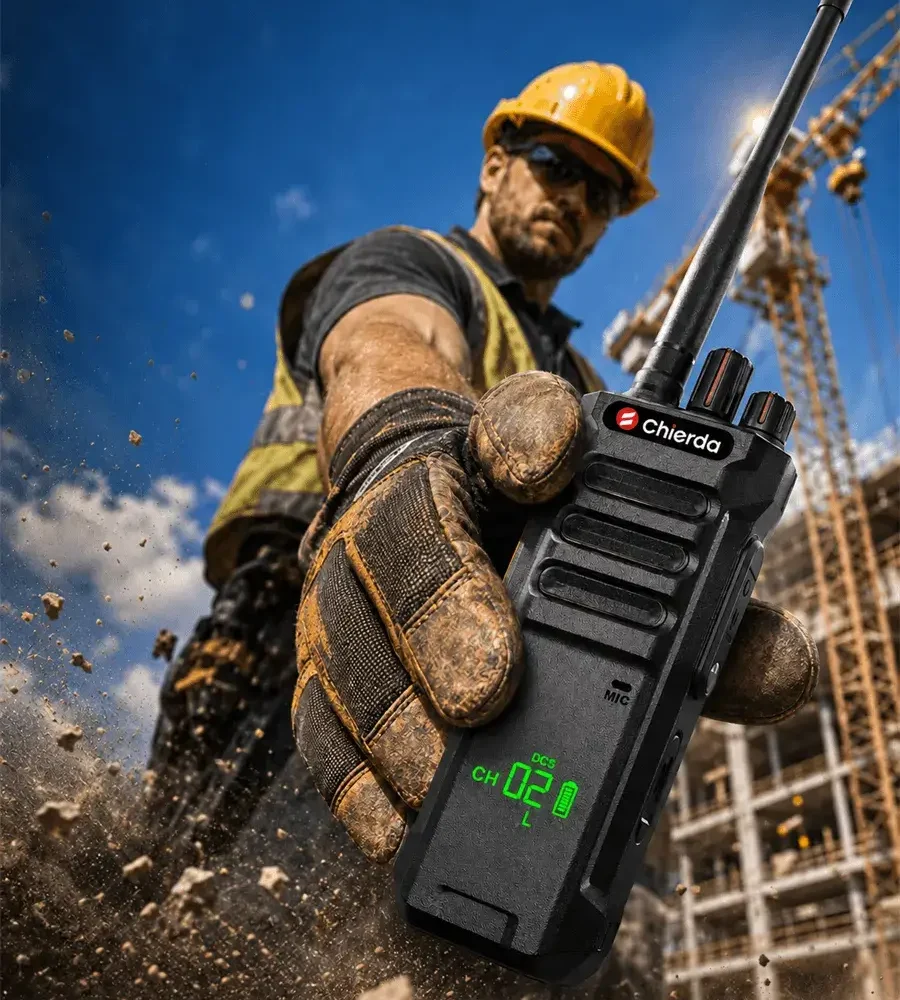
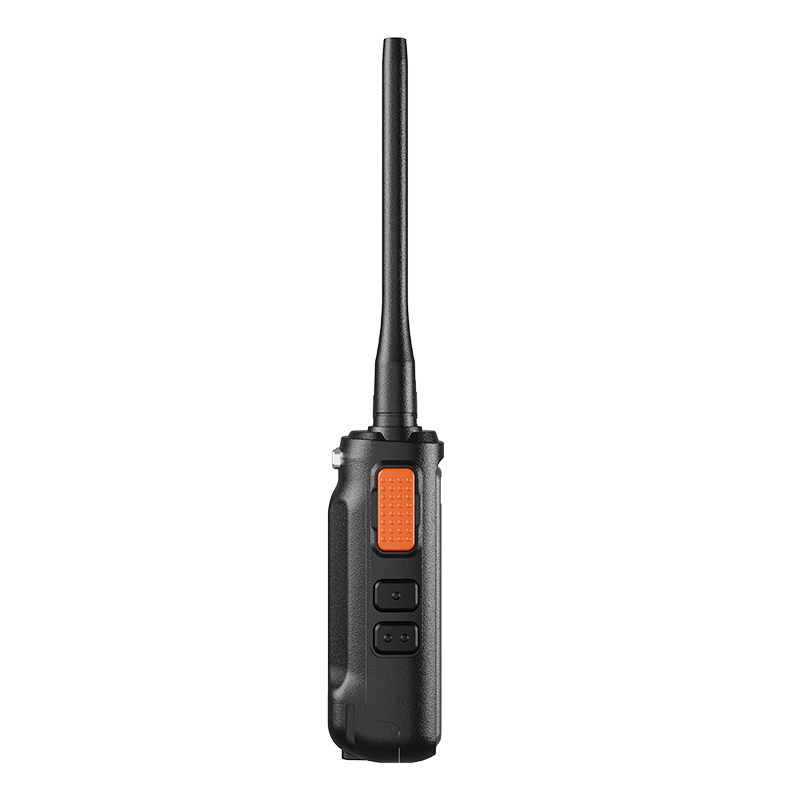
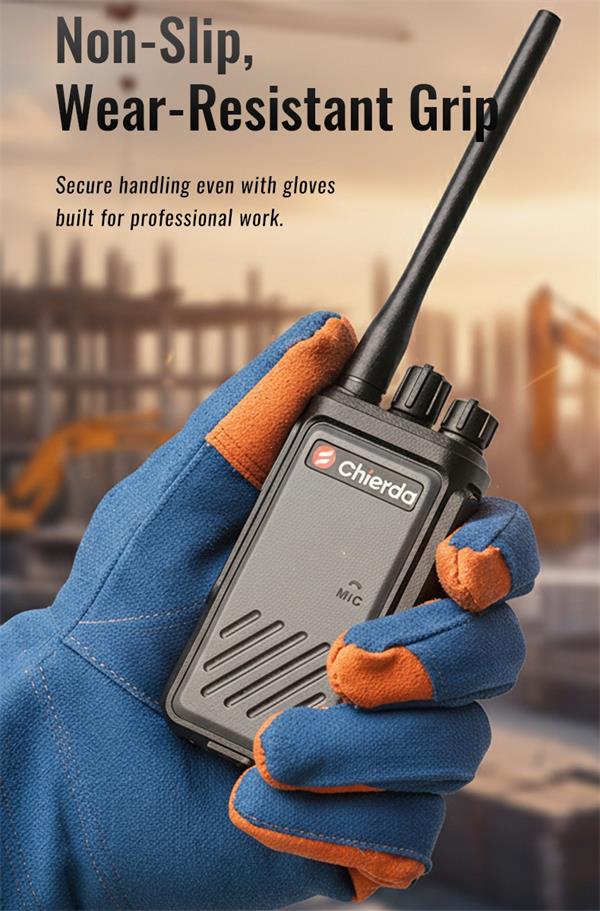
- Compact body with glove-friendly controls. The housing measures 98.5 x 53 x 35 mm without the antenna. A matte surface finish keeps the radio steady in the hand, and the PTT button stays within thumb reach when gloves are on.
- Two battery capacities. Choose 1500mAh or 2600mAh, both rated 3.7V DC. The larger pack carries more capacity for longer use between charges.
- One-key frequency pairing. Two radios can be brought onto the same frequency with a single key operation, which shortens handover and replacement at the start of a shift.
- One-key channel copy. A configured radio can pass its channel setup to another CD360 on the spot, so a spare unit or a new starter kit does not need to be programmed on a PC first.
- Voice scrambler. The scrambler processes transmitted audio so that a receiver without the matching setting hears unintelligible sound rather than clear speech.
- Frequency hopping. Transmissions move across frequencies during a call, which the manufacturer presents as a way to reduce interference and casual listening on a fixed channel.
- Code-breaking function. Intended to decode the codes used by other radios on site, so teams working with mixed equipment can reach a shared channel instead of running two separate systems.
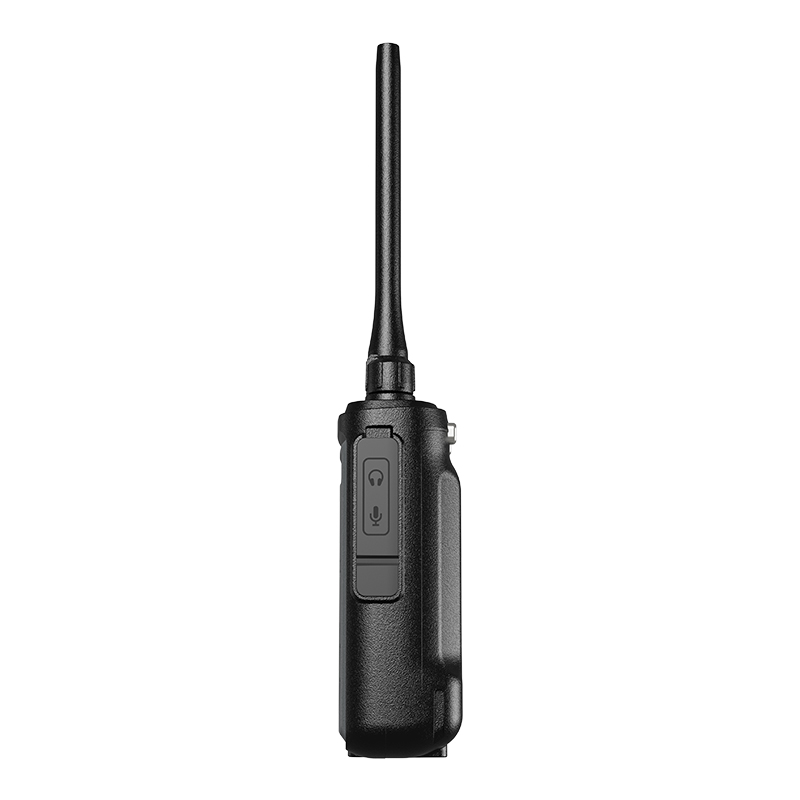
- Type-C charging port. A USB Type-C port on the radio body handles charging, which matches the cable and charger standard most field kits already carry.
- 16 channels at 2W output. Sixteen memory channels with 12.5KHz or 25KHz spacing cover the channel plans typically used by retail, security and site teams.
- Audio rated at 300mW or more. Receiver audio output is specified at ≥300mW with ≤5% distortion, the design basis for the clear speech the manufacturer claims.

Functions and Performance
Audio Output and Receiver Behaviour
The receiver is specified at 0.25uV to 0.3uV RF sensitivity and 0.2uV to 0.25uV squelch sensitivity, with selectivity of 65dB or better and intermodulation of 60dB or better. In practice that combination decides whether a weak call still opens the squelch and whether a strong transmitter nearby swamps the channel. Audio output of at least 300mW at no more than 5% distortion is what makes speech usable in a shop floor or a loading bay, where the background noise sets the limit rather than the radio.
Setting Up a Fleet Without Cables
Frequency pairing, channel copy and code-breaking all work without a programming cable, which matters for a team that changes sites or rotates staff. A supervisor can set one radio, copy the configuration across the group and hand units out, and a replacement arriving mid-shift can be matched to the rest in a few key presses. The wireless copy function described by the manufacturer covers the same ground for setup between units.
Voice Scrambler and Frequency Hopping
The scrambler and the hopping function address two different problems. The scrambler makes the audio itself unreadable to a receiver that does not hold the matching setting, which keeps casual listeners on a shared channel out of the conversation. Frequency hopping changes the frequency in use during a transmission, which the manufacturer positions as a way to limit interference and casual monitoring of a fixed frequency. Neither function replaces a licensed digital network, and both depend on the radio on the other end being configured to match.
Charging and Runtime
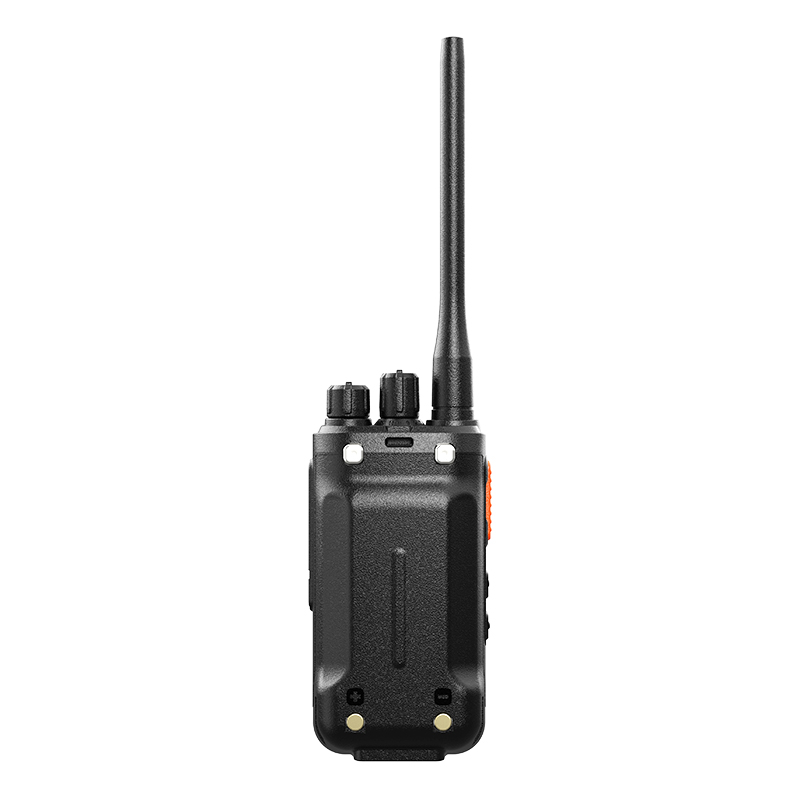
A Type-C port on the body means the radio charges from the same cable family as most phones and field accessories. Runtime follows the pack fitted: the 1500mAh option suits a shorter shift, the 2600mAh option suits longer duty. Both are removable, so a spare pack extends coverage without waiting for a charge.
Applications
- Retail and hospitality. Staff on a shop floor or across a hotel property stay in contact without leaving the counter, and the compact body does not get in the way during service.
- Security and patrol. Voice scrambling keeps routine traffic off the ears of anyone scanning the channel, and 16 channels separate patrol groups from the control room.
- Construction and site coordination. Gloved operation and a matte housing suit outdoor work, and channel copy puts a new subcontractor’s radio on the site channel in a few presses.
- Warehouse and logistics. A pocket-sized 2W handheld with 12.5KHz spacing fits dense channel plans across a large floor area.
- Events and temporary sites. Frequency pairing sets up a crew quickly when the radio pool is assembled on the day.
- Mixed radio fleets. The code-breaking function is aimed at sites where another brand is already deployed and a new group needs to join the same channel.
What’s in the Box
- Radio x 1
- Battery x 1
- Belt clip x 1
- Charger x 1
- Strap x 1
- User’s manual x 1

Technical Specifications
General
- Frequency Range: VHF 136-174MHz or UHF 400-480MHz (two versions)
- Memory Channel: 16
- Channel Spacing: 12.5KHz / 25KHz
- Rated Voltage: 3.7V DC
- Battery Capacity: 1500mAh / 2600mAh (optional)
- Frequency Stability: ±2.5ppm
- Antenna Impedance: 50Ω
- Dimension: 98.5 x 53 x 35 mm (without antenna)
- Modulation Mode: 16K∅F3E / 11K∅F3E
- Charging Port: Type-C
Transmitter
- Output Power: 2W
- Current: ≤1.2A
- Modulation Distortion: <5% (300-3000Hz)
- Maximum Frequency Deviation: ≤5KHz / ≤2.5KHz
- CTCSS Frequency Deviation: 0.75KHz ±50Hz
- Remanent Radiation: ≤7uW
- Remanent Modulation: ≤-35dB
Receiver
- RF Sensitivity: ≤0.25uV / ≤0.3uV
- Squelch Sensitivity: ≤0.2uV / ≤0.25uV
- Audio Frequency Power: ≥300mW
- Audio Distortion: ≤5%
- Receiver Bandwidth: ±7KHz
- Spurious Rejection: ≥55dB
- Selectivity: ≥65dB
- Intermodulation: ≥60dB